Cuba Facing Forward: Balancing Transition with Development in the Caribbean’s Most-Watched Nation

In Havana, Cuba, 80% of the city’s housing stock was built between 1900 and 1958. After the Revolution ended in 1959, Cuba’s new socialist housing policy was generally guided by three principles: housing is a basic human right, housing should be equitable, and decisions about housing are the responsibility of the government. Among other things, the initial approaches to housing policy reduced rents, provided generous subsidies, and prohibited the private sale or purchase of homes. However, while the initial policies did improve access to affordable housing, the embargo imposed by the US in 1961 and the economic hardships of the decades that followed made it increasingly difficult for homeowners and renters to perform necessary upgrades to aging homes or renovate to accommodate growing families. As a result, nearly three quarters of all housing built in Cuba since 1959 is partially or fully self-built.
In November 2011, a new policy returned property rights and the bulk of decision-making power to homeowners, giving them the right to buy and sell property through private transactions. However, this new freedom did not facilitate Cubans’ access to the market, as people had virtually no access to capital beyond equity from dilapidated homes.
In July 2015, former US President Obama announced his intention to restore full diplomatic ties with Cuba after 54 years. The US relaxed rules on remittances, allowed more authorized travel, and opened channels for telecommunications and e-commerce. US firms gained opportunities to support Cuba's private sector, and banking restrictions eased. Yet “for every American developer eager to capitalize on relaxed land development policies, there are Cubans whose sub-standard housing and crumbling infrastructure serve as a reminder of the ways in which American investment reshaped their lives.”
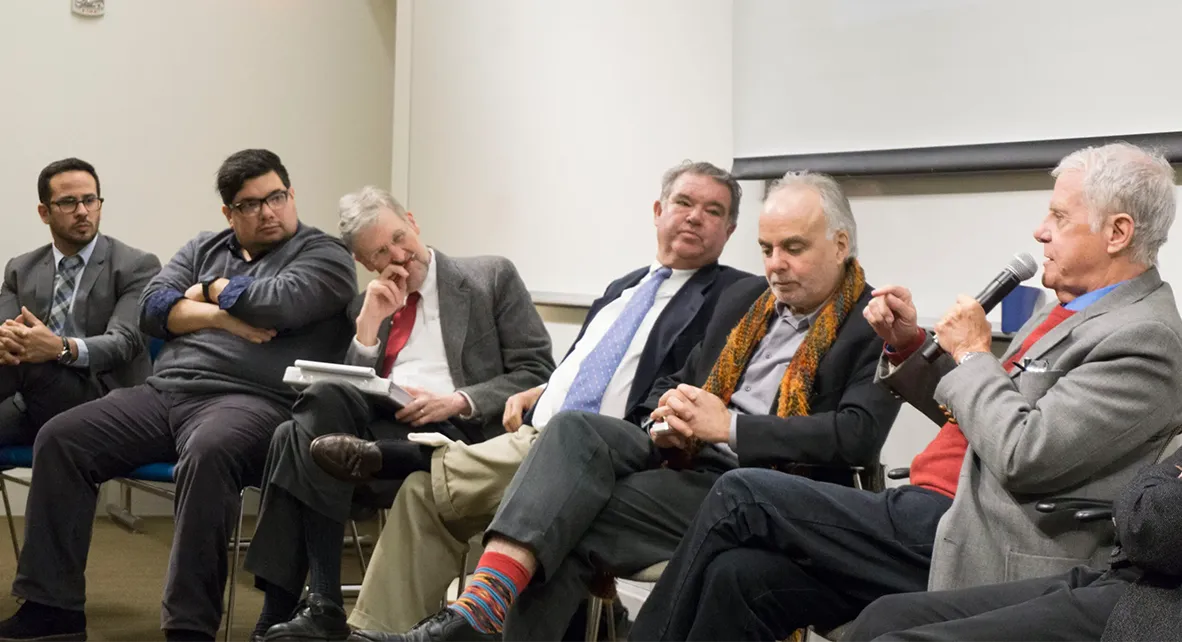
Four months later, in November 2015, AHI convened “Cuba Facing Forward: Balancing transition with development in the Caribbean’s most-watched nation,” a one-day symposium that brought together leading professionals, both Cuban and American, in architecture, urban planning, ecology, law, and real estate development, to discuss the changes taking place in Cuba-US relations and how these changes might impact the built and natural environments in Cuba. The event was attended by over 80 people, including academics, entrepreneurs, developers, policymakers, students, and executives. Speakers discussed how ethical, inclusive, and community-based design is essential for urban development in transitional contexts, emphasizing that architecture and infrastructure must be complemented by “soft infrastructure” like participatory processes, institutional engagement, and programming that connects local realities to larger systems.
Conference Proceedings
In 2018, AHI published an anthology to expand on the multidisciplinary platform created by the conference. By then, Fidel Castro had died, Donald Trump was president of the United States, and the process of normalizing relations between the US and Cuba had been thrown into uncertainty. Yet the key points that emerged from “Cuba Facing Forward” still ring true. Building on the model of the conference itself, discussants stressed the importance of building partnerships, interdisciplinary approaches, and collaboration with and within Cuba, over the simple application of externally driven development models.